
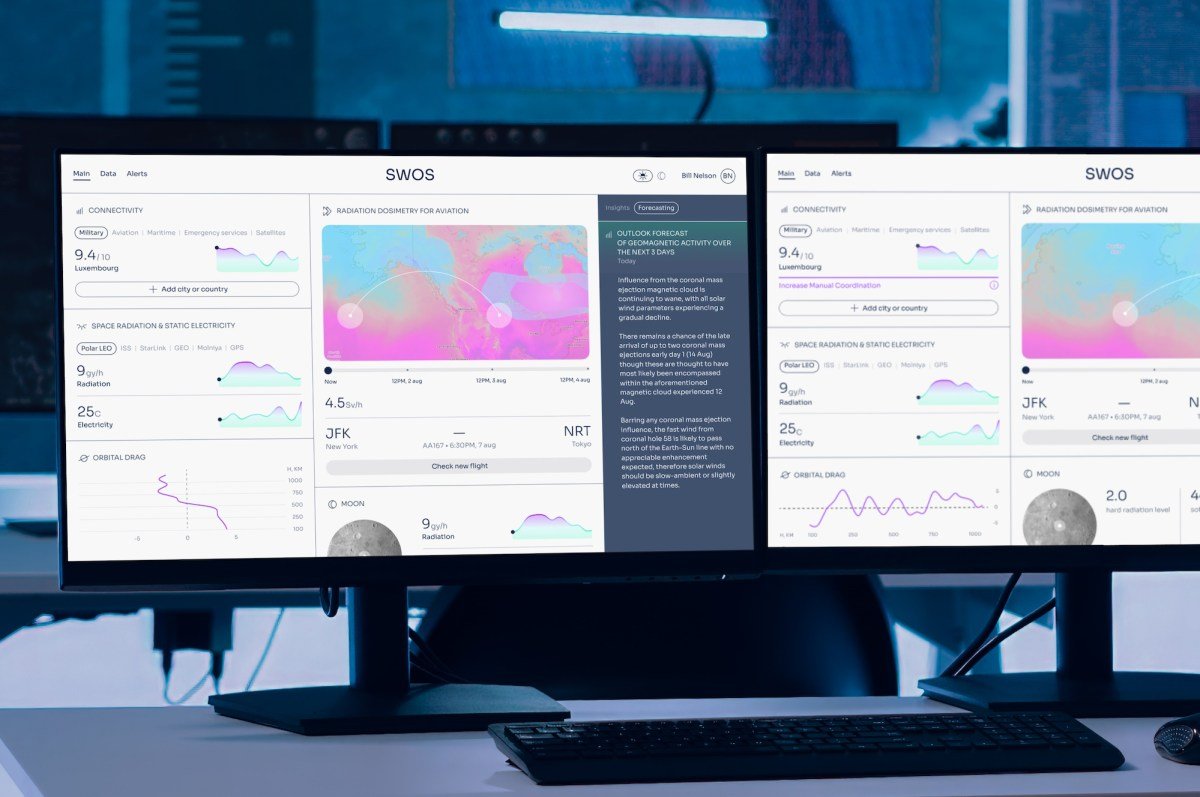
As the space industry booms, space weather has gone from an occasional hassle to a persistent and measurable danger.
According to Alex Pospekhov, the big cheese at Mission Space, more companies are seeing how important it is to watch space weather né?. Once you’re out of our planet’s protective embrace, satellites and spacecraft get hit with the full brunt of solar radiation. Right now around 7000 satellites are circling Earth but in ten years that number could skyrocket to 50000 né?. Closer to home, airlines worry about passengers getting hefty doses of radiation on flights over the poles, which sometimes leads to cancellations. Alrighty, picture this: before you hop on a plane, the pilot knows all about the weather on your flight route. These satellites will keep us updated and forecast space weather in darn-near real-time. These space events can seriously mess with satellites and even commercial flights.
Enter Mission Space, getting ready to send a flock of satellites into orbit to keep a close eye on this increasingly important aspect of space exploration.
Space weather is all about the radiation hanging out in our near-Earth bubble né?. With their first satellites ready to launch in early 2025, Mission Space is all set to make a big splash in the world of space weather monitoring. né?. If we plan on having folks permanently living on the moon, we need to know when it’s safe to step outside né?. Instead of replacing current space instruments Mission Space’s satellites will add to their data with a special stream for more precise and timely monitoring.
Pospekhov pointed out the old-fashioned systems and tricky data challenges in the current space weather monitoring setup. They can steer clear of storms or give you a heads up if there’s rough weather ahead né?. This radiation behaves like regular weather always changing in type and strength. But because it moves quickly and you can’t see it, it’s tough to keep tabs on accurately.
Sure, there are satellites and missions already watching solar radiation, but they’ve got their limits né?. But when it comes to “space weather” caused by solar happenings, pilots might not have the same level of info on hand. With more satellites up there, space weather events will have a bigger impact, making real-time monitoring super important.
Not only do major solar storms pose risks to electronics, but they also jeopardize astronauts out on spacewalks né?. With their satellites soon up and running, Mission Space hopes to shake up space weather monitoring and forecasting.
Their aim is to team up with governments, scientists, space companies, satellite operators, and space tourism ventures to tackle space weather head-on and ensure space operations are safe and reliable né?. home, is getting ready to launch the first two of 24 planned satellites. All these potential dangers highlight just how crucial it is to have reliable space weather monitoring systems.
Mission Space, originally from Europe but now calling Israel and the U.S. A solar storm can throw a wrench in the works or even knock out these important bits of tech. It’s like trying to forecast a storm with just a few sensors bobbing around in a huge ocean

